
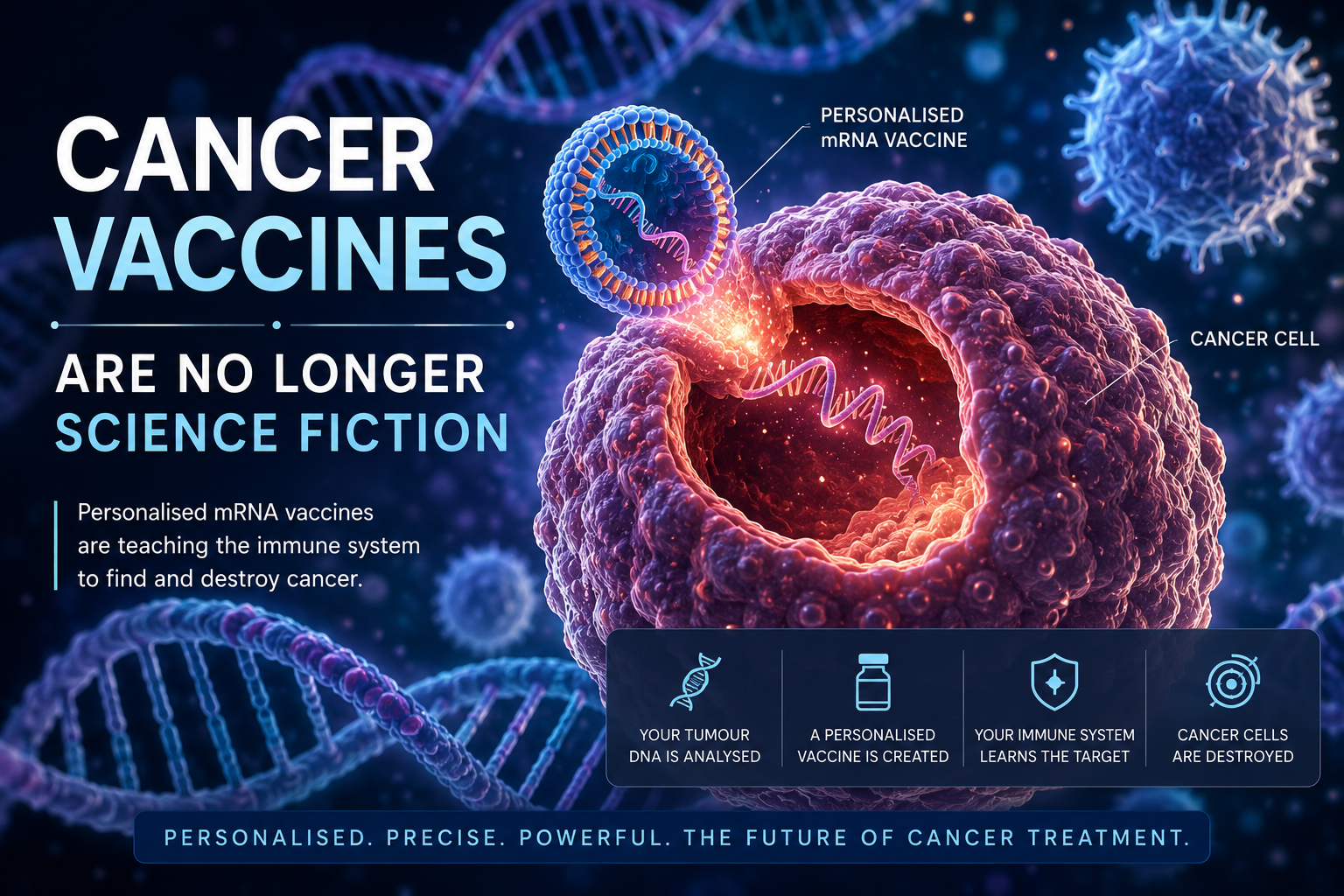
For most of my medical career, the phrase "cancer vaccine" sounded more like a promise than a reality. Every few years there would be headlines announcing a breakthrough. Researchers would generate excitement. Patients would understandably ask whether a vaccine could prevent or cure cancer. Yet most of those early approaches struggled to deliver meaningful clinical results.
Something feels different this time. Not because we've suddenly discovered a universal cure for cancer, but because advances in genetics, sequencing technology and mRNA platforms have made it possible to create treatments tailored to an individual patient's tumour. For the first time, personalised cancer vaccines are producing results that are difficult to ignore.
What Exactly Is a Cancer Vaccine?
When most people hear the word "vaccine," they think of prevention — COVID, influenza, tetanus. Cancer vaccines are different. Most of the current excitement centres on therapeutic cancer vaccines — vaccines designed to help the immune system recognise and attack cancer cells that already exist.
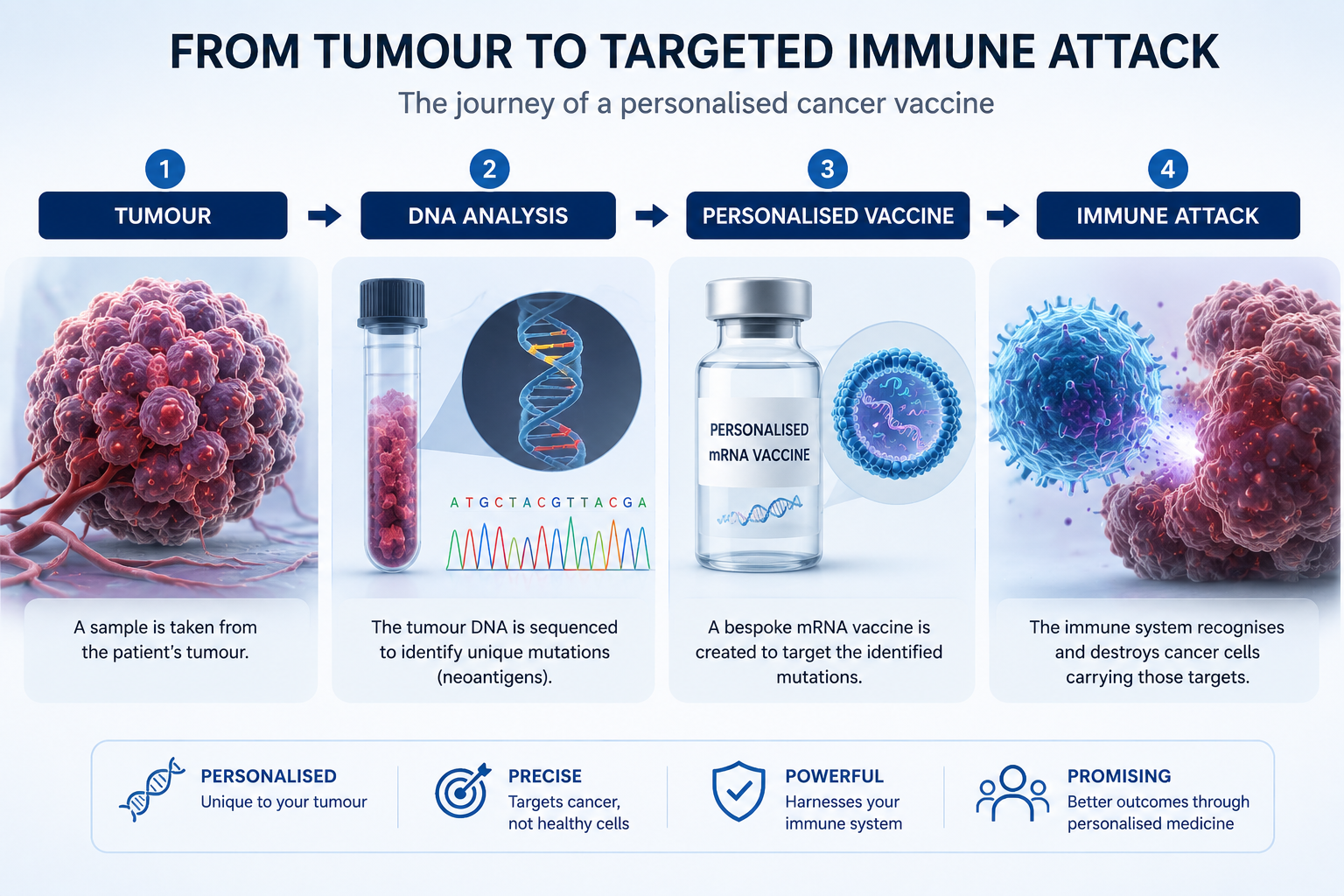
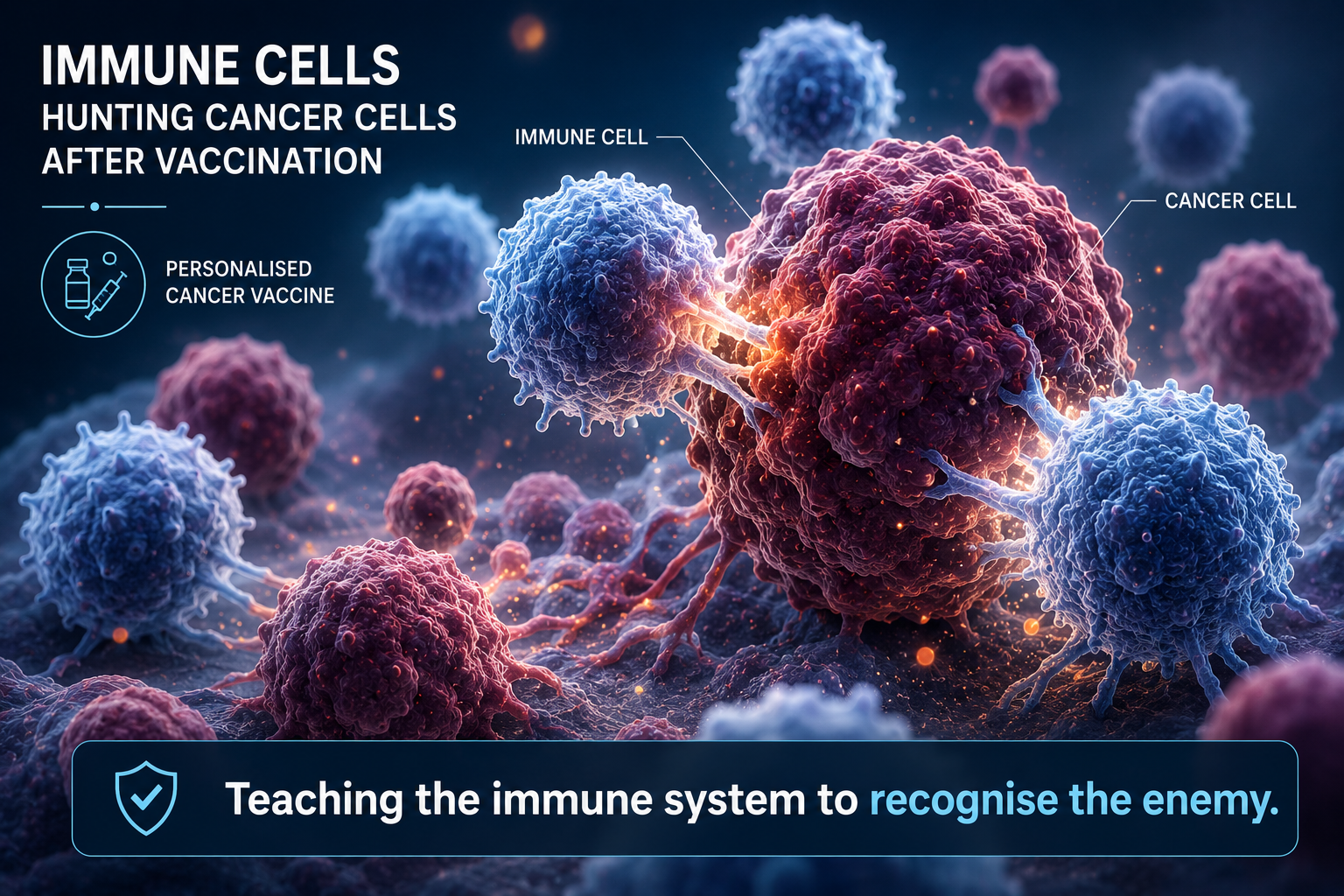
The concept is elegant. Scientists analyse a patient's tumour and identify unique mutations that make those cancer cells different from normal tissue. Those mutations are then used to create a personalised vaccine that trains the immune system to recognise and destroy cells carrying those specific targets. In effect, the immune system receives a customised "wanted poster."
Why mRNA Changed Everything
The technology behind many of these vaccines will sound familiar. The success of COVID-19 mRNA vaccines demonstrated that scientists could rapidly design, manufacture and deliver genetic instructions safely and effectively. Cancer researchers quickly realised the same technology could be adapted. Instead of teaching the immune system to recognise a virus, mRNA could teach it to recognise cancer. The result is a highly personalised treatment approach that would have been almost impossible a decade ago.
The Melanoma Results That Got Everyone's Attention
One of the most widely discussed developments involves a personalised vaccine known as mRNA-4157, developed alongside pembrolizumab. Patients with high-risk melanoma had their tumours sequenced after surgery. Researchers then created a personalised vaccine targeting mutations unique to each individual's cancer.
Early trial results suggested a substantial reduction in recurrence and death compared with standard treatment alone. For oncologists, those findings were impossible to ignore. The study remains ongoing, but it offered something increasingly rare in cancer research: genuine optimism.
What About Other Cancers?
Melanoma is only the beginning. Researchers are investigating personalised vaccines across multiple tumour types, including:
- Pancreatic cancer.
- Lung cancer.
- Colorectal cancer.
- Kidney cancer.
- Bladder cancer.
- Ovarian cancer.
Pancreatic cancer has generated particular interest. In one study, some patients developed tumour-specific immune responses that remained detectable years after treatment. Given the historically poor outcomes associated with pancreatic cancer, even modest progress is welcomed.
Why Early Diagnosis Matters More Than Ever
One theme keeps appearing throughout cancer vaccine research: earlier disease performs better. This makes sense — the smaller and less complex the tumour burden, the easier it is for the immune system to mount an effective response.
Which brings us back to general practice. Most GPs won't be prescribing personalised cancer vaccines anytime soon. But we remain central to the part of the pathway that matters most: finding cancer early.
- Every bowel screening discussion.
- Every suspicious mole.
- Every unexplained weight loss.
- Every persistent cough.
- Every red-flag symptom.
The sooner cancer is identified, the more treatment options become available.
The Challenges Ahead
It's important not to get carried away. Personalised cancer vaccines still face significant hurdles:
- Cost — each vaccine must be tailored to an individual tumour, which makes manufacturing complex and expensive.
- Time — tumour sequencing and vaccine production take time.
- Access — most treatments remain available only through specialist centres and clinical trials.
- Long-term data — while early results are encouraging, longer follow-up is needed to determine how durable the benefits truly are.
The science is exciting. The evidence is still evolving.
What This Means for Patients
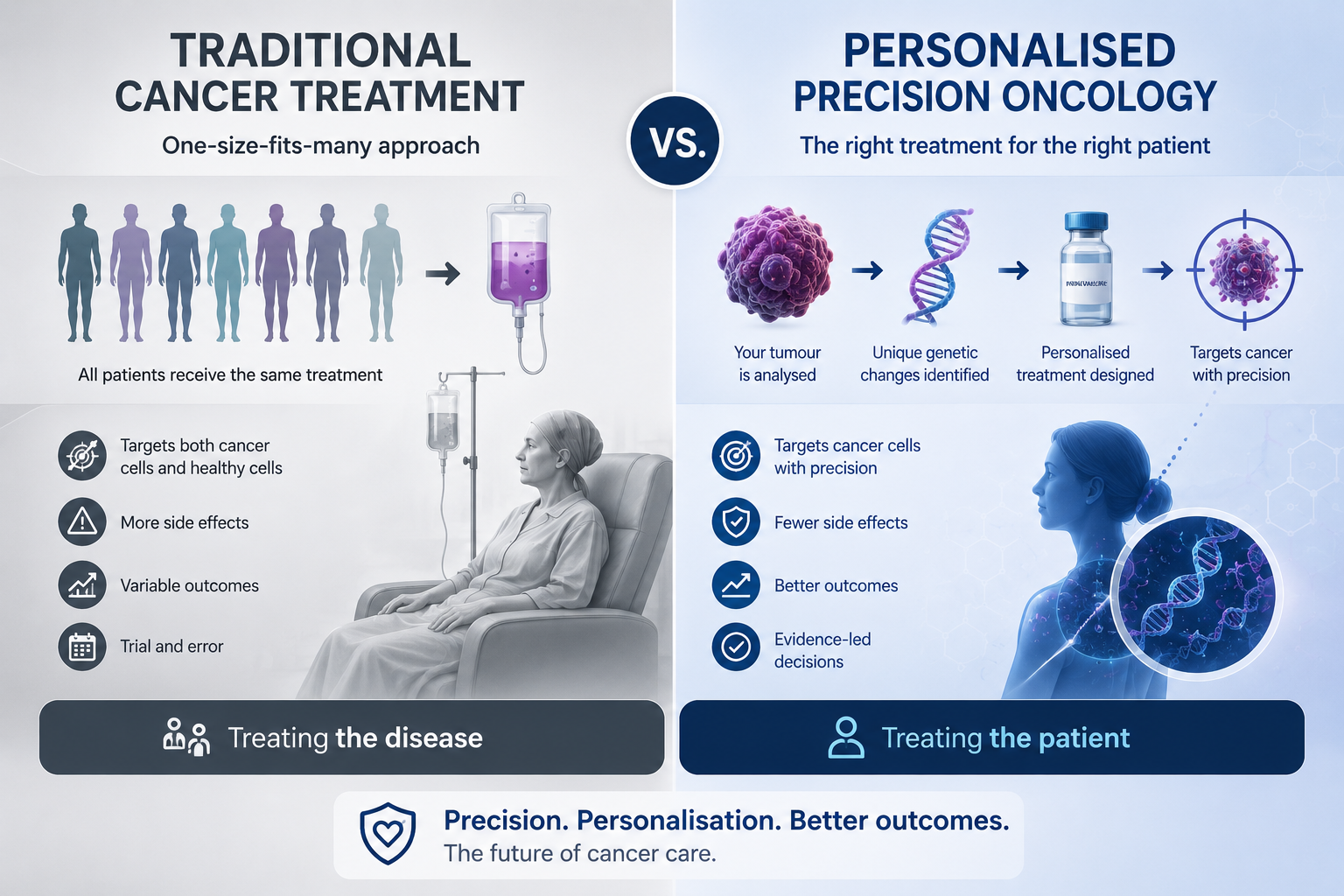
Patients will increasingly encounter headlines about cancer vaccines. Many will naturally wonder whether they should receive one. The answer, for now, is usually: "Not yet." Most personalised cancer vaccines remain within clinical trials or specialist oncology programs. But the direction of travel is clear — cancer treatment is becoming increasingly personalised. The era of treating every patient with the same approach is gradually fading.
The Bigger Picture
Perhaps the most important lesson is that cancer vaccines are not replacing existing treatments. They are being added to them — surgery, chemotherapy, radiotherapy, immunotherapy, targeted therapies. Cancer vaccines may become another tool in an increasingly sophisticated toolbox.