
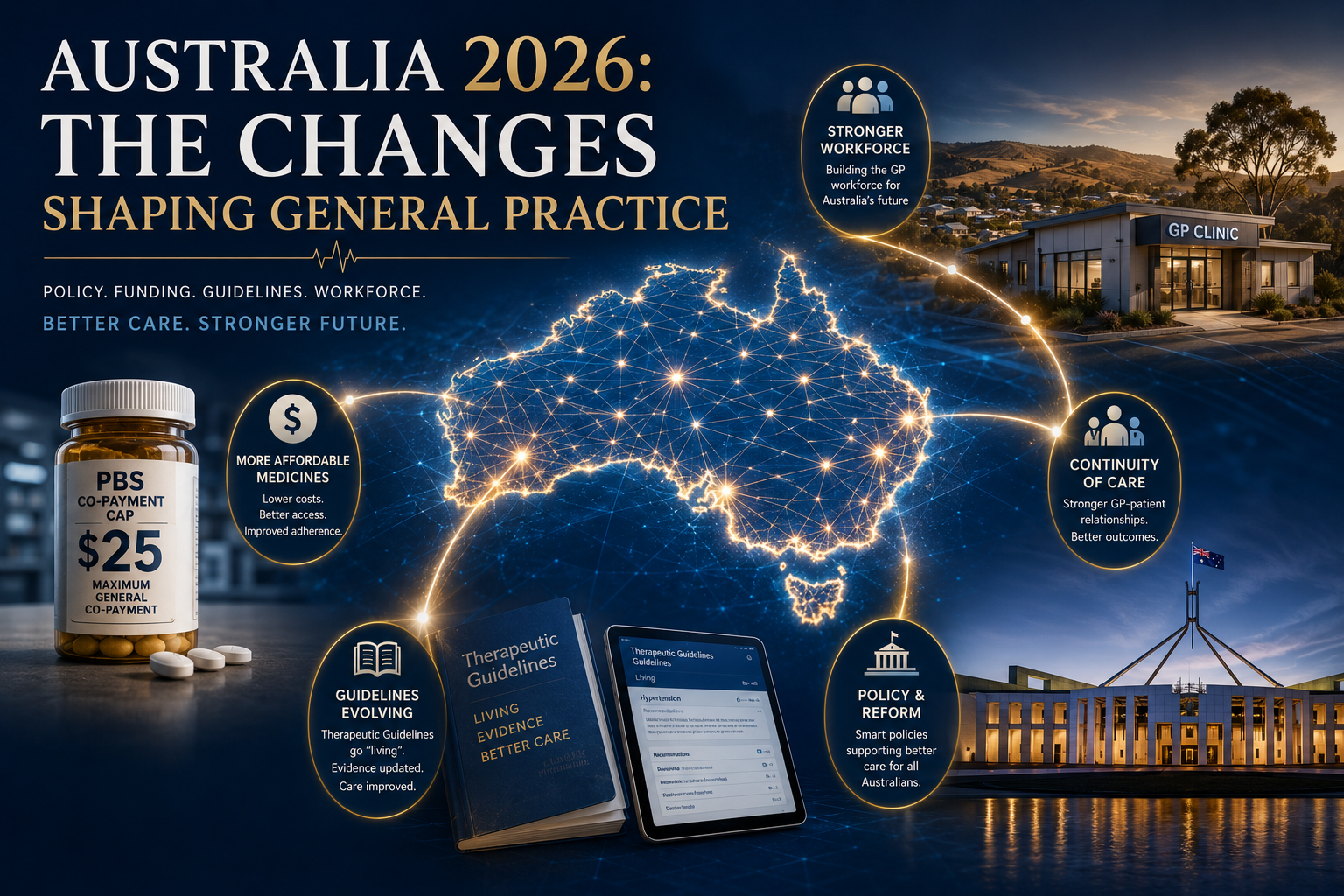
It's easy to become distracted by headlines about gene editing, cancer vaccines and artificial intelligence. Yet on Monday morning, most Australian GPs will feel the impact of something far less glamorous: policy, funding, PBS changes, guideline updates and workforce reforms.
These rarely make front-page news, but they often influence patient care far more quickly than any laboratory discovery.
The PBS Co-Payment Reduction
The headline reform is affordability. Since January 2026, the maximum general PBS co-payment has been capped at $25. For many patients, that means:
- Lower out-of-pocket costs.
- Improved adherence.
- Fewer skipped prescriptions.
- Better long-term disease control.
The biggest beneficiaries are often patients managing multiple chronic conditions.
Therapeutic Guidelines Go "Living"
One of the quiet revolutions in Australian medicine is the shift toward continuously updated guidelines. Rather than waiting years for new editions:
- Evidence can be updated rapidly.
- Recommendations evolve continuously.
- Clinicians access the latest guidance sooner.
The implication is simple: the printed copy on your shelf may already be outdated.

MyMedicare Continues to Expand
The push toward continuity of care continues. The goal is straightforward:
- Stronger GP–patient relationships.
- Better chronic disease management.
- Improved care coordination.
- Reduced fragmentation.
The concept isn't new. The funding model increasingly reflects its importance.
Workforce Changes
Australia continues to face GP workforce pressures. Recent initiatives include:
- Additional GP training places.
- Rural workforce incentives.
- Expanded registrar pathways.
- Support for underserved communities.
The challenge remains balancing growing demand with workforce supply.

Pharmacist Prescribing
Few topics generate more discussion among GPs.
Supporters see:
- Improved access.
- Reduced delays.
- Greater convenience.
Critics raise concerns regarding:
- Fragmentation of care.
- Diagnostic complexity.
- Medication safety.
- Continuity.
Regardless of opinion, the landscape is changing. Understanding the model is becoming increasingly important.
Preventive Medicine Remains the Biggest Opportunity
Amid all the reforms, the fundamentals remain remarkably unchanged. Most preventable illness still relates to:
- Smoking.
- Obesity.
- Hypertension.
- Diabetes.
- Physical inactivity.
- Alcohol misuse.
What This Means for Patients
Many patients will notice:
- Cheaper prescriptions.
- Easier access to updated care pathways.
- More digital integration.
- Greater emphasis on preventive care.
Most will never notice the policy changes behind the scenes. But they'll feel the effects.