
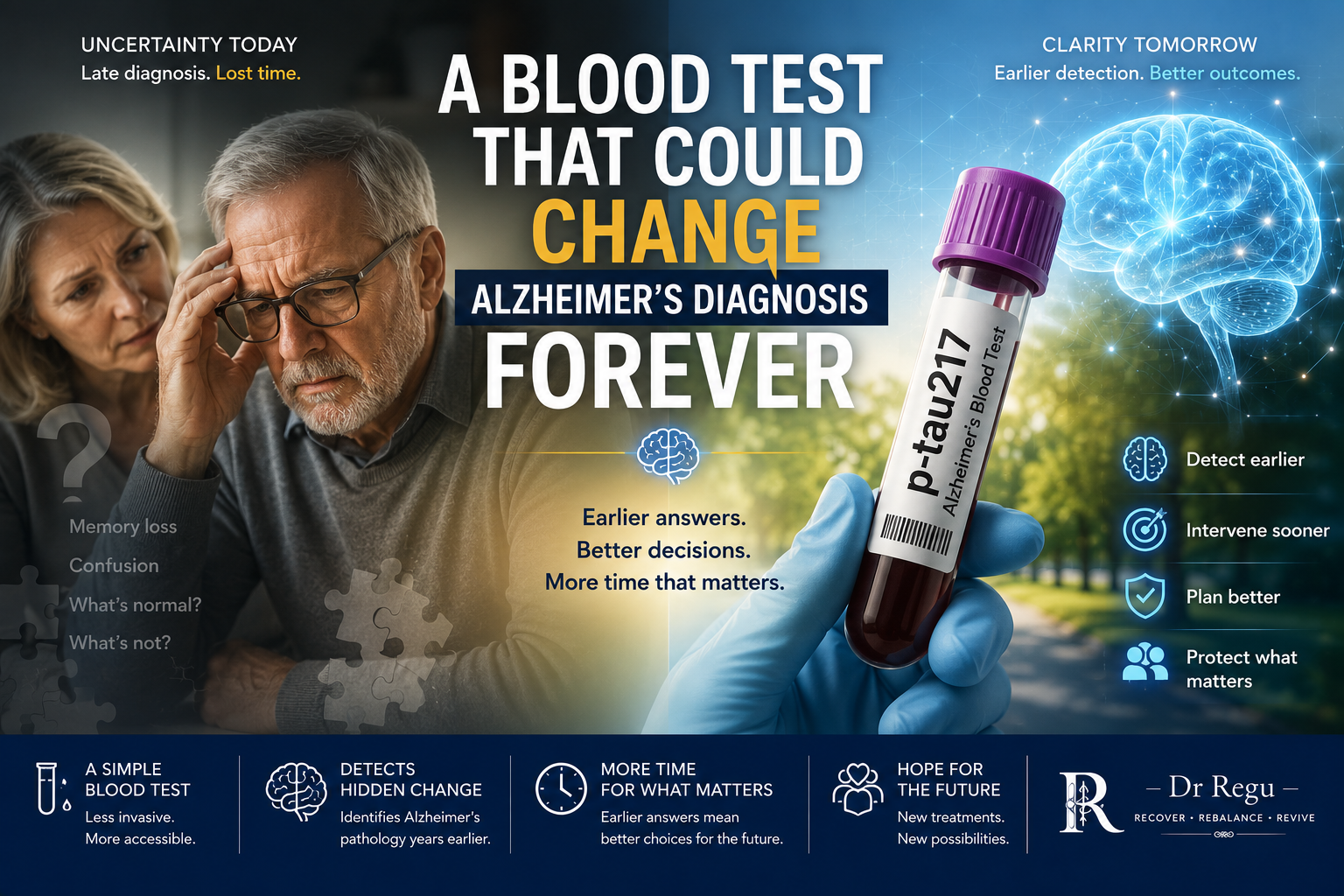
For most of my career as a GP, Alzheimer's disease has been one of the most frustrating conditions to diagnose and manage. Patients arrive worried about their memory. Families notice subtle changes. Conversations become difficult. Yet for many years, confirming the diagnosis often required specialist assessment, expensive imaging or invasive testing, while treatment options remained limited. That landscape is beginning to change.
Not because we've suddenly found a cure, but because two major developments are moving Alzheimer's disease into a completely new phase:
- Blood biomarkers such as plasma p-tau217.
- Disease-modifying treatments such as lecanemab and donanemab.
Together, they are changing how we think about diagnosis, prognosis and treatment. The bigger question is whether they will change outcomes.
Why Alzheimer's Has Been So Difficult to Diagnose
Traditionally, diagnosing Alzheimer's disease has been part detective work and part probability. Doctors piece together:
- Memory symptoms.
- Cognitive testing.
- Functional decline.
- Brain imaging.
- Specialist assessment.
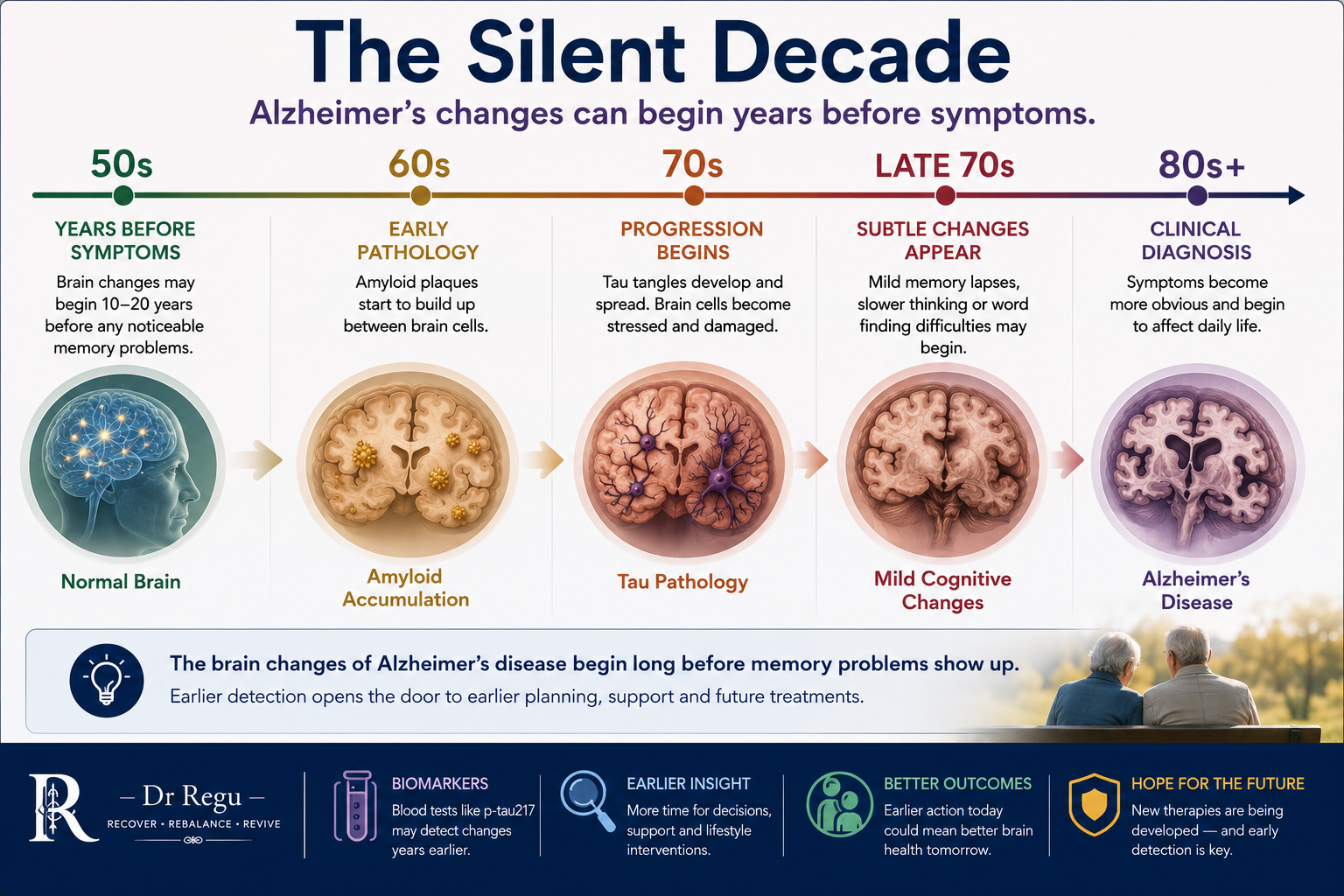
Even then, certainty can be elusive. The underlying disease process often begins years — sometimes decades — before symptoms become obvious. By the time memory problems are affecting daily life, significant brain changes may already have occurred. This delay has always limited our ability to intervene early.
Meet p-tau217: The Blood Test Making Headlines
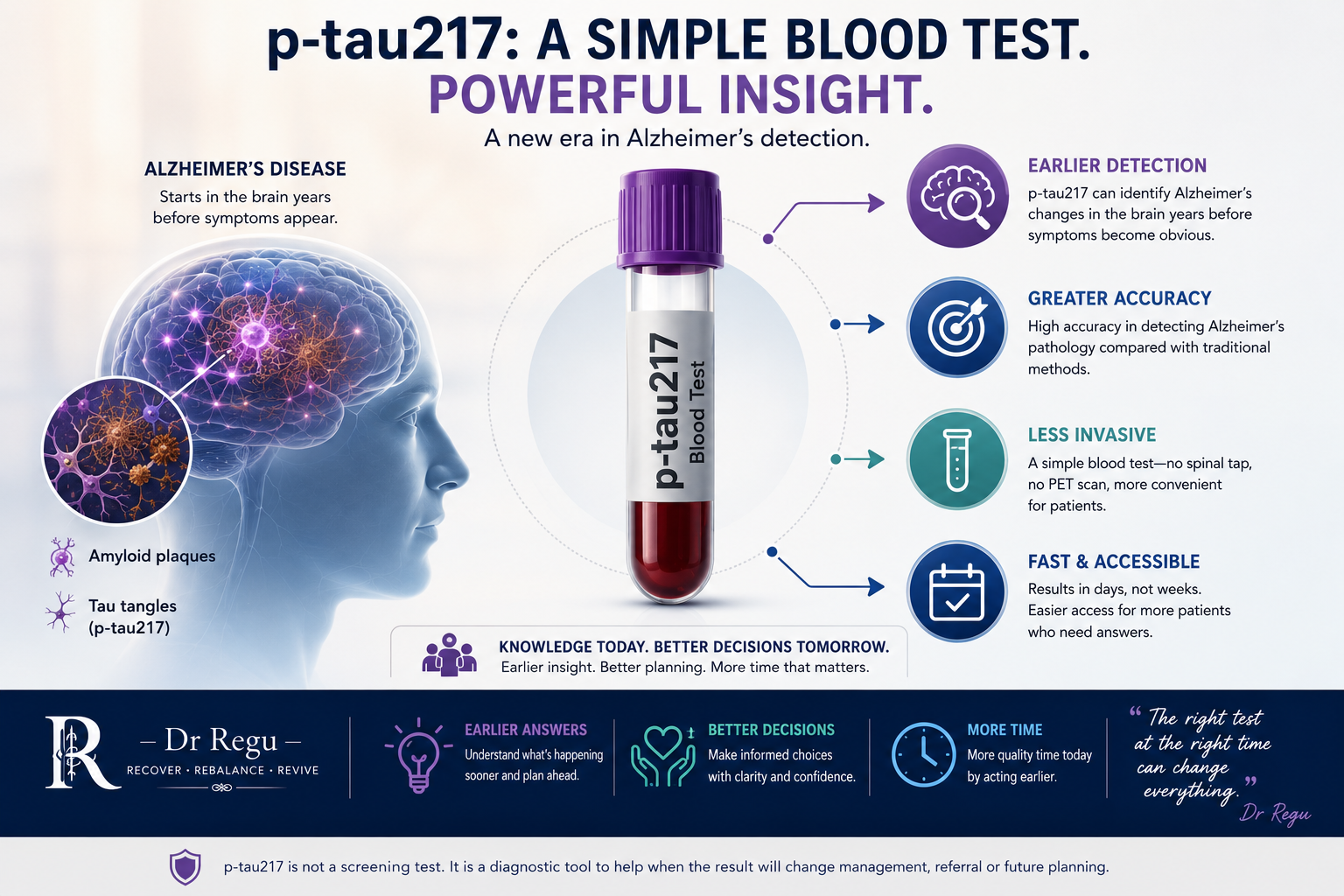
One of the most exciting developments in neurology is a blood biomarker called plasma p-tau217. Without diving too deeply into molecular biology, p-tau217 is a modified form of the tau protein that becomes elevated when Alzheimer's-related changes are occurring in the brain. What makes this remarkable is that it can often detect Alzheimer's pathology long before symptoms become severe.
In clinical studies, p-tau217 has shown impressive accuracy in identifying patients with underlying Alzheimer's disease and correlates strongly with established markers such as:
- Amyloid PET imaging.
- Cerebrospinal fluid testing.
- Tau pathology.
In practical terms, it may allow doctors to identify Alzheimer's disease earlier, more conveniently and at lower cost than many existing approaches.
Why Earlier Diagnosis Matters
Some people understandably ask: "If we still don't have a cure, why does earlier diagnosis matter?" It's a reasonable question.
Earlier diagnosis can help patients and families:
- Understand the cause of symptoms.
- Access support services sooner.
- Plan for the future.
- Manage financial and legal decisions.
- Address modifiable risk factors.
- Consider emerging treatment options.
Knowledge isn't always comfortable. But uncertainty can be even harder.
The New Treatments: Progress, Not Perfection
The other major story is the arrival of disease-modifying therapies. Two names have dominated the headlines: lecanemab and donanemab.
These treatments work by targeting amyloid plaques that accumulate in the brains of people with Alzheimer's disease. Clinical trials have shown that they can modestly slow cognitive decline in carefully selected patients with early disease. That represents genuine progress. However, it's important to keep expectations realistic. These medications:
- Do not cure Alzheimer's disease.
- Do not restore lost memory.
- Require careful patient selection.
- Require ongoing monitoring.
- Carry risks, including brain swelling and microbleeds.
For many patients, the benefits are meaningful but modest. The media headlines can sometimes make the effect sound larger than it is.
What Causes Alzheimer's Disease?
Although age remains the biggest risk factor, Alzheimer's disease is influenced by a complex combination of genetics, lifestyle and vascular health. Risk factors include:
- Increasing age.
- Family history.
- APOE ε4 genetic status.
- High blood pressure.
- Diabetes.
- Smoking.
- Hearing loss.
- Physical inactivity.
- Social isolation.
- Depression.
- Poor sleep.
This is important because not every risk factor is beyond our control.
What Can We Do Today?
While researchers continue searching for better treatments, there is already strong evidence that protecting brain health starts long before memory symptoms develop. The fundamentals remain surprisingly powerful:
- Control blood pressure — what's good for the heart is generally good for the brain.
- Exercise regularly — physical activity improves vascular health and may reduce dementia risk.
- Treat hearing loss — untreated hearing impairment is increasingly recognised as a modifiable dementia risk factor.
- Prioritise sleep — sleep plays a critical role in brain maintenance and memory consolidation.
- Stay socially connected — human beings are wired for connection; social engagement appears protective for cognitive health.
- Manage depression — mood and cognition are closely linked, particularly in older adults.
These interventions may not make newspaper headlines, but they remain among the most evidence-based strategies available.
Who Might Benefit From p-tau217 Testing?
The key point is that p-tau217 is a diagnostic tool, not a screening tool. Not every person who occasionally forgets where they left their keys needs a blood test. The greatest value is likely to be in situations where the result would genuinely influence:
- Diagnosis.
- Referral decisions.
- Future planning.
- Specialist assessment.
- Consideration of emerging therapies.
What This Means for Patients
If you are concerned about memory changes, don't assume it is "just ageing." Equally, don't assume every lapse in memory means Alzheimer's disease. Memory concerns deserve proper assessment. The encouraging news is that our ability to investigate those concerns is improving rapidly. The future may involve a simple blood test helping to answer questions that once required far more complex investigations.